
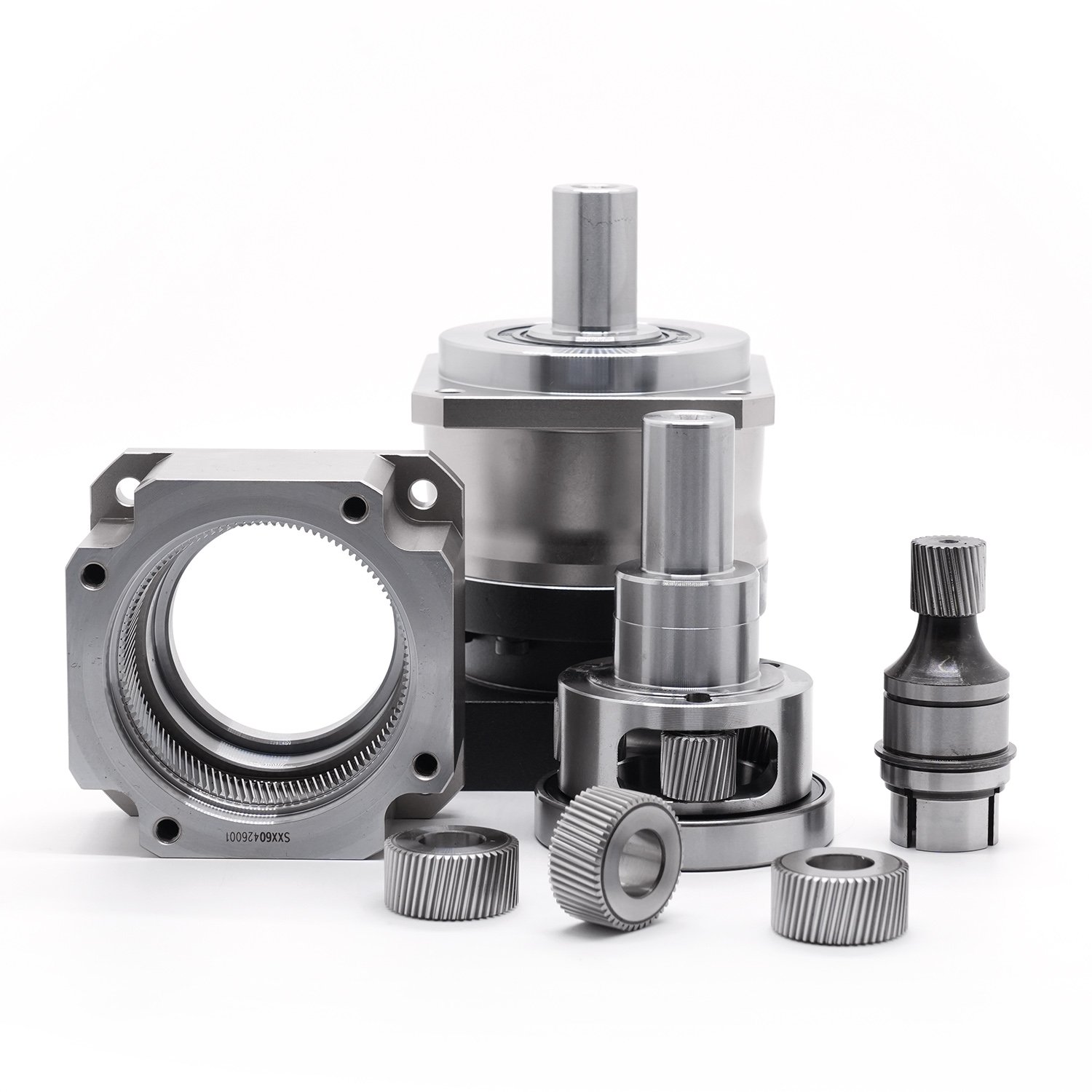
A gearbox is the core transmission component that connects the motor to the working mechanism, reducing speed while increasing torque. Choosing the right one directly affects operating efficiency, service life, and safety.
Key Selection Points
1. Define your working conditions. Before selecting, confirm the input speed, output speed, and required output torque, then work out the gear ratio and actual load torque. Don’t confuse rated torque with what you actually need. Be sure to account for load fluctuations, starting shocks, and overload factors — it’s common practice to leave a safety margin of about 1.2 to 2 times the rated torque.
2. Match the gear ratio and accuracy. The gear ratio determines the output speed, so it should be calculated backwards from the linear or angular speed of your working mechanism. For applications that demand precise positioning — like robotic arms or CNC machines — choose planetary gearboxes with low backlash and high accuracy. For ordinary uses, worm gear or helical gear units offer good value without overspending.
3. Check the mounting method and structure. Choose between horizontal, vertical, or flange mounting based on your available space, and confirm the output shaft type (solid or hollow) as well as the keyway and spline dimensions. Also check how much radial and axial load the gearbox will bear; add support if needed to prevent the output shaft from bending under stress.
4. Consider the environment and efficiency. For hot, dusty, humid, or corrosive conditions, pick a suitable protection rating and lubricant type. For long continuous operation, gear designs with higher efficiency are preferable, as they reduce energy consumption and heat buildup.
Things to Watch Out For
- Before installation, verify the gearbox nameplate against the motor specs to ensure the interface dimensions — flanges, shaft ends, keyways — all match. Keep the shafts well aligned during assembly; poor alignment accelerates wear and causes noise.
- Fill the specified grade and quantity of lubricating oil or grease, then change it on schedule after the initial break-in period and inspect the oil quality regularly.
- During operation, monitor temperature, unusual sounds, and vibration. If the unit runs too hot or leaks, stop it and inspect right away.
- Never run above rated speed or load, and avoid harsh forward-reverse impacts. Using soft start and soft stop can noticeably extend the gearbox’s lifespan.
In short, base your gearbox choice on real working conditions, balancing accuracy, load, environment, and cost — and follow proper installation, lubrication, and maintenance practices. That’s the way to keep your transmission system running smoothly and reliably for the long haul.